
API Enablement Process
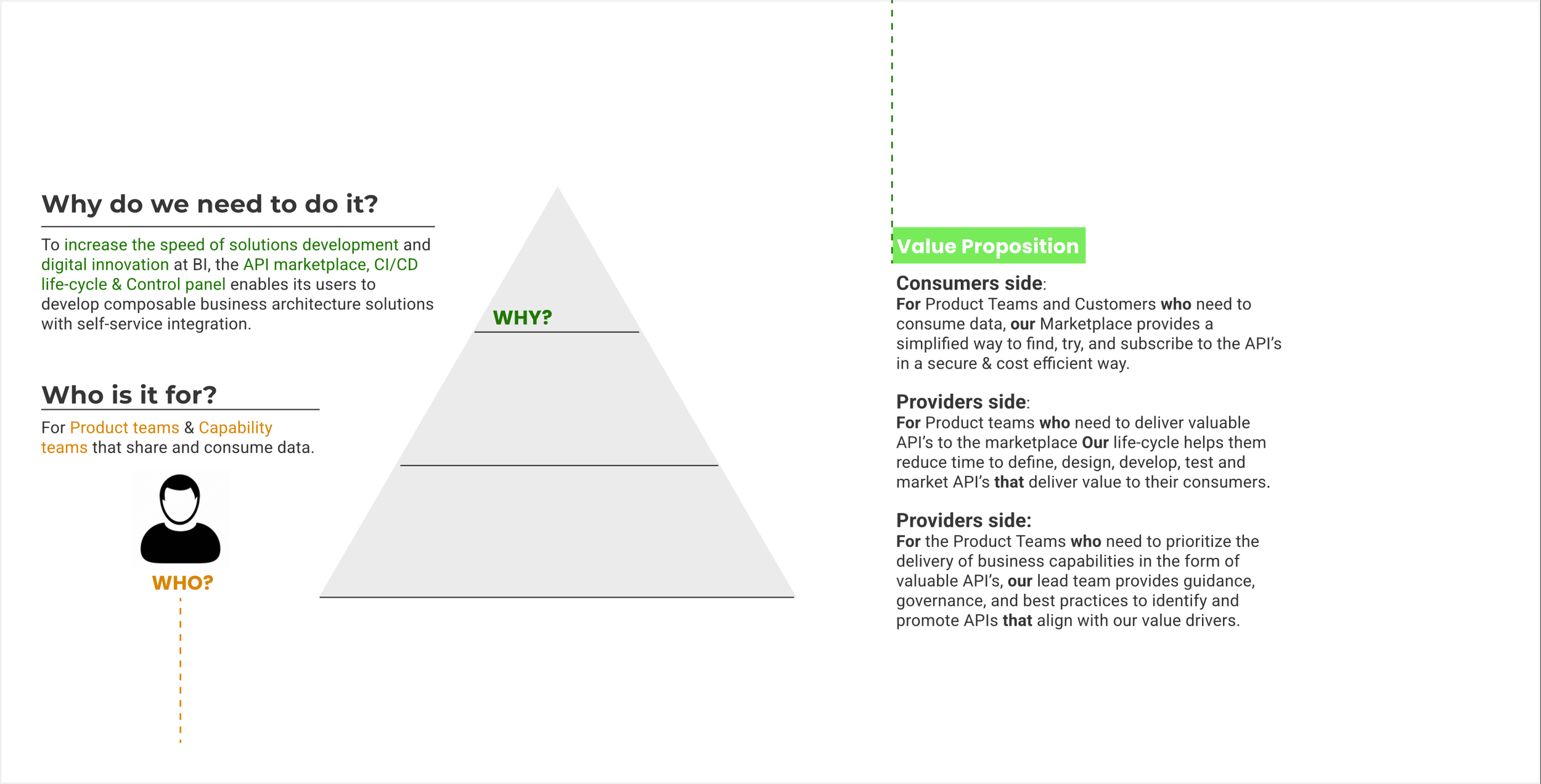
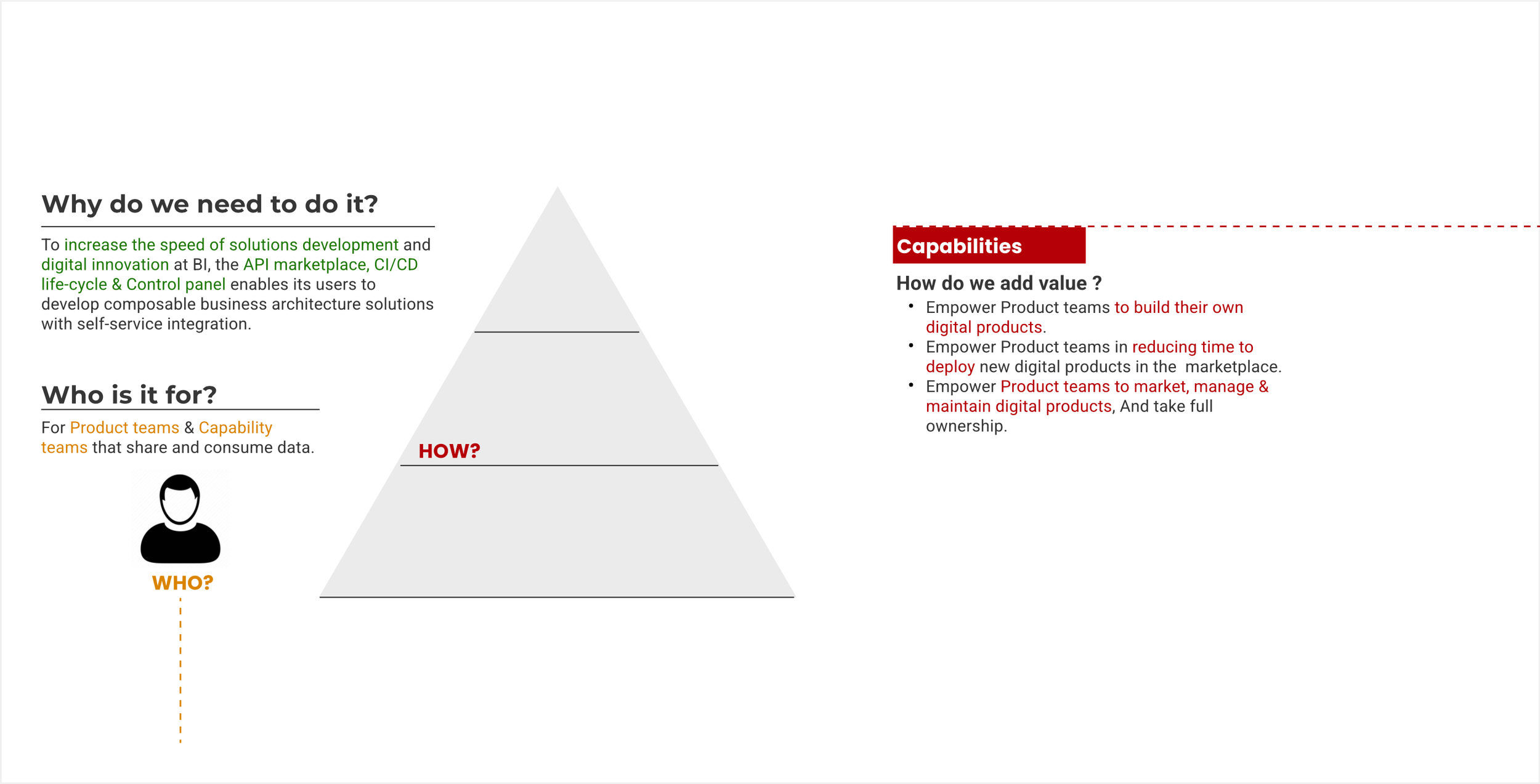
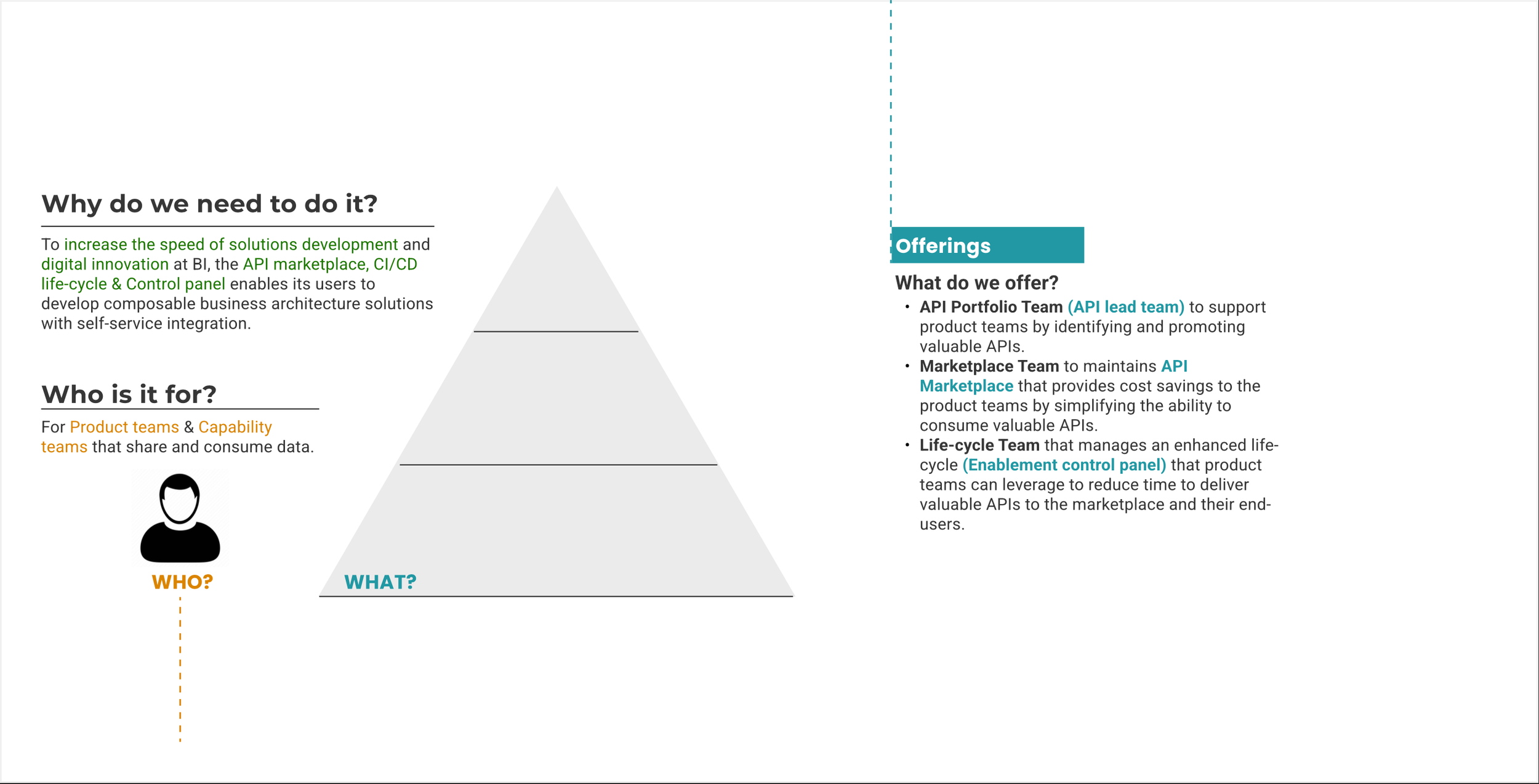
- Organizational Research | Understanding & Visualizing context using the whole-view model
Project Overview
This project, with a strong focus on enabling API capabilities at Boehringer Ingelheim, was guided by a steadfast commitment to a user-centered design approach. As the lead UX Researcher and Designer, I spearheaded a comprehensive process that improved the accessibility and usability of the API platform for both technical and non-technical users. By leveraging qualitative and quantitative research, we delivered a seamless experience that improved onboarding time and boosted API adoption rates.
Key Outcome: This API Enablement project significantly improved user satisfaction and operational efficiency, reducing API onboarding time by over 50% and increasing API adoption by 30% across teams.
Problem Definition
The core challenge was to improve the API Marketplace's usability for users of different technical skill levels. For instance, non-technical users, such as business analysts, struggled with the platform's complexity, while technical users, like software engineers, required efficient integration management tools. Through in-depth research, we identified key pain points in user workflows and data management, which guided our redesign to simplify interactions without sacrificing functionality.
Key Business Problem: Enabling seamless API integrations while ensuring ease of use for a wide range of user personas, from highly technical engineers to less technical business users.
Activity System
Research Methodology
To address the diverse user needs, I conducted a multi-phase research strategy:
User Interviews and Surveys: Conducted over 20 interviews with technical and non-technical stakeholders to gather insights into their pain points and expectations.
Remote Usability Testing: Utilized UserZoom for remote unmoderated usability testing, assessing the ease of API interactions for various personas.
Heuristic Evaluations: Carried out heuristic reviews of existing workflows to identify areas of friction.
The insights gained from this research were pivotal in shaping the API platform's final design, ensuring a user-centered approach that was in perfect alignment with our business goals.
Tools & Technologies
Throughout the project, I utilized a suite of modern tools to support both design and research:
Figma: For wireframing, prototyping, and cross-functional collaboration.
Adobe Analytics: To analyze user behavior and identify data trends that inform design decisions.
Figma Dev mode: Used for seamless handoff of design assets to developers, ensuring consistency in implementation.
Agile Process: Worked in an agile environment, collaborating closely with the engineering team to iterate quickly on feedback and align our design solutions with the development roadmap.
User-Centered Research
Promoting a user-centered design culture was a vital part of this project. I facilitated cross-disciplinary workshops with product managers, engineers, and business stakeholders to build empathy and alignment around the end-users' needs. These workshops fostered collaboration and ensured that data-driven research insights informed all decisions.
Additionally, I set up a research insights repository, allowing the findings to be easily accessible for future projects, thus contributing to the company's ResearchOps efforts.
Collaboration & Stakeholder Management
Collaboration was essential for success. I worked closely with product owners and data scientists to iteratively present research findings and wireframes. I ensured design recommendations, such as simplifying the user interface and improving error handling, were backed by usability data and business requirements, resulting in smooth stakeholder buy-in and cross-functional alignment.
Terrains and Territory
Value Web
Impact & Results
By applying a user-centered approach, we were able to:
Improve API usability scores by 15%, streamlining the experience for both technical and non-technical users.
Reduce onboarding time by 25 days, making the API platform more accessible and easier to adopt.
Increase API adoption rates by 30%, demonstrating the positive business impact of our design improvements.
These enhancements directly supported Boehringer Ingelheim's digital transformation efforts, ensuring the API platform could scale efficiently to meet future business needs.
Service Blueprints & Journey Mapping
To understand the API platform's complexity clearly, I created detailed customer journey maps and service blueprints, illustrating each step of the user's interactions with the API. These visual tools helped the team grasp key pain points and provided a roadmap for improving the user experience.
Service Blueprint - Future State
API Enablement Team’s System of Offerings
Key Takeaways
One of the significant lessons from this project was the importance of bridging the gap between technical complexity and user-friendly design.
The project's success came from early and continuous stakeholder involvement, combined with a rigorous research process that kept the user's needs at the forefront. In the future, I would continue refining our research strategies to drive even more alignment between technical development and user experience.